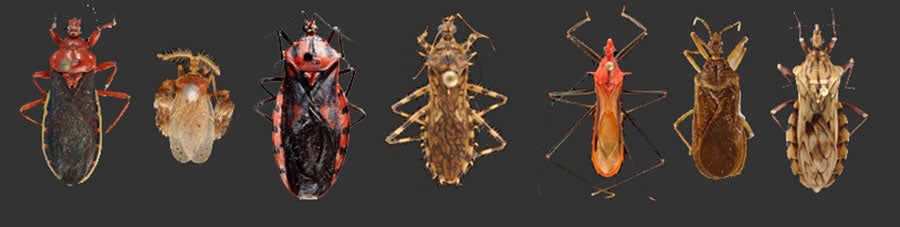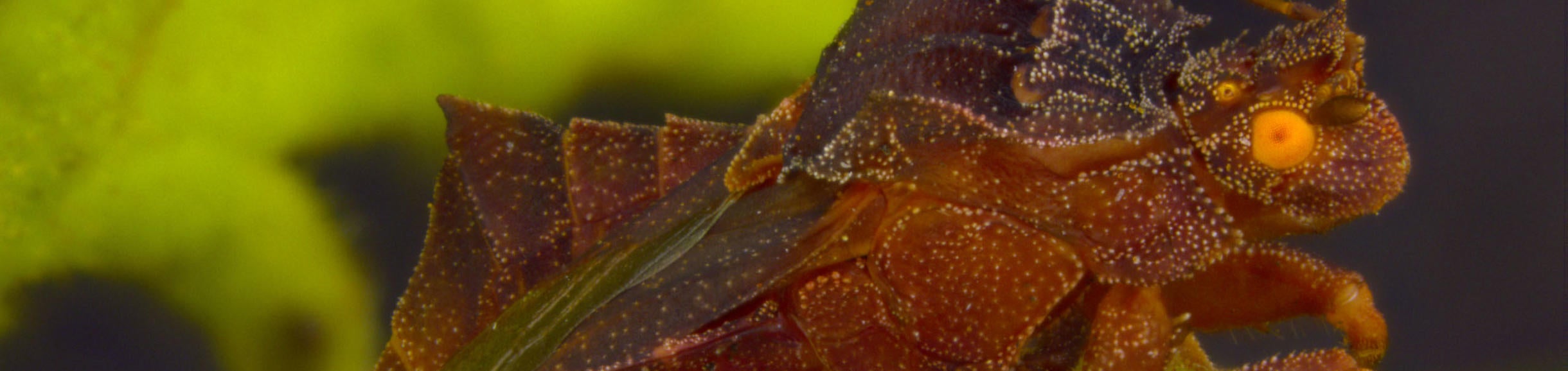
With almost 7,000 described species, Reduviidae (Insecta: Heteroptera), or assassin bugs, are one of the largest and morphologically most diverse groups of Heteroptera, or true bugs (Froeschner and Kormilev 1989, Maldonado 1990, Cassis and Gross, 1995). Reduviidae have a worldwide distribution and are most diverse in the tropics of the Old and New Worlds. Assassin bugs range is size from only a few millimeters up to three centimeters long. They also show remarkable morphological diversity, with the so-called thread-legged bugs (Emesinae), kissing bugs (Triatominae), and ambush bugs (Phymatinae) being a few of only a handful of subfamilies that actually have a distinctive appearance in this heterogeneous taxon. Assassin bugs also show an exceptional range of specialization on their prey organisms. Sticky trap bugs (Harpactorinae), blood-feeding kissing bugs (Triatominae), ant-luring feather-legged bugs (Holoptilinae), spider web-inhabiting thread-legged bugs (Emesinae), and termite-feeding Salyavatinae are some examples of groups with apparently specialized feeding habits in this assemblage of more than twenty subfamily-level taxa. The most notorious Reduviidae are found among the kissing bugs or Triatominae, which are not only hematophagous on vertebrates, but also transmit Chagas Disease in humans.
Read more about some ongoing research on assassin bugs in the Weirauch lab here!
Click here for a comprehensive key to the 25 subfamilies of Reduviidae.